
What Nobody Tells You About the Helicopter Return from Everest Base Camp
7th Jul, 2026

Short answer: The helicopter return from Gorak Shep to Kathmandu, included on the Everest Base Camp Luxury Trek, is genuinely one of the best parts of the trip, but it's also the part with the least predictable timing. It saves three to four days of walking, gives you a view of the Khumbu that no trail ever offers, and can leave you a little queasy and strangely emotional, sometimes all within the same ten minutes. Almost every trekking company lists it as a single bullet point: "helicopter return from Gorak Shep." Nobody tells you what actually happens between boarding and landing.
Table of Contents
Here's the part that gets left out.
The Morning Before: You Don't Actually Know What Time You're Flying
This is the first honest thing to say about the helicopter return: the schedule is a plan, not a promise. Flights out of Gorak Shep and Lukla are almost entirely weather-dependent, and mountain weather in the Khumbu can shift from clear to socked-in within an hour, especially as the morning warms up. Most luxury departures build in a buffer day specifically because of this. If you're trekking in peak season (March to May or September to November), delays of a few hours are common; multi-day delays are rare but not unheard of.
What this means practically: pack your patience along with your daypack. The wait usually happens in the relative comfort of the lodge at Gorak Shep or a tea house, not on an open runway, and your guide will be in constant contact with the helicopter company. But if you've mentally locked in an exact departure time for your flight home from Kathmandu, build at least one extra day of slack into your international connection. This is the single most practical thing nobody says clearly enough before you book.
Boarding: Smaller and Louder Than You Expect
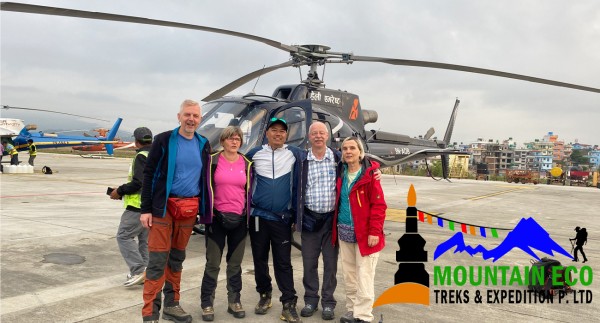
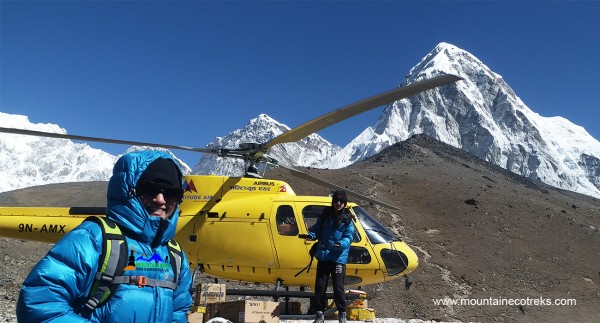
The helicopters used on this route are typically five- or six-seat aircraft, and boarding feels nothing like a commercial flight. There's no jet bridge, no seatbelt sign, no safety video. You get a quick briefing from the pilot or ground crew, step across the skid, and buckle in facing your fellow trekkers, knees almost touching. Headsets go on immediately, partly for communication and partly because the rotor noise at close range is loud enough to make conversation impossible without them.
The one detail that catches people off guard: luggage weight limits are strictly enforced here, typically around 15kg per person on the return leg. If you've picked up extra weight in trail purchases, singing bowls, prayer flags, the inevitable extra fleece, this is where it gets weighed, not estimated.
Liftoff: The Moment Nobody Describes Properly
This is the part every brochure undersells. The helicopter doesn't taxi and climb gradually the way a plane does. It lifts straight up off the ground, hovers for a second, and then the entire Khumbu drops away beneath you all at once. For a route you've just spent eight or nine days walking, step by step, watching it shrink to a thread beneath the skids in a matter of seconds is genuinely disorienting, in a good way.
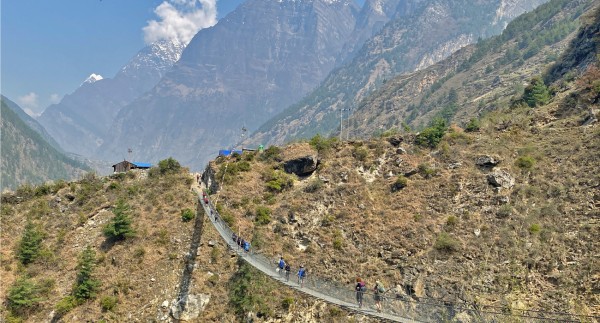
The emotional contrast is real, and it's worth naming honestly. Walking up to Everest Base Camp is slow, physical, and cumulative. Every village, every suspension bridge, every acclimatization day builds on the last, and you earn the altitude gradually. Flying back down compresses all of that into about 35 to 45 minutes. Some trekkers describe it as euphoric. Others describe a strange flatness, almost grief, at watching days of hard-won effort scroll past the window in minutes. Both reactions are completely normal, and neither is talked about nearly enough in the marketing copy.
What You Actually See From the Window
This is the payoff, and it's a real one. Sitting on the right side of the aircraft on the way down generally gives the better mountain views, though pilots often bank the helicopter to give everyone a look. In sequence, you typically pass:
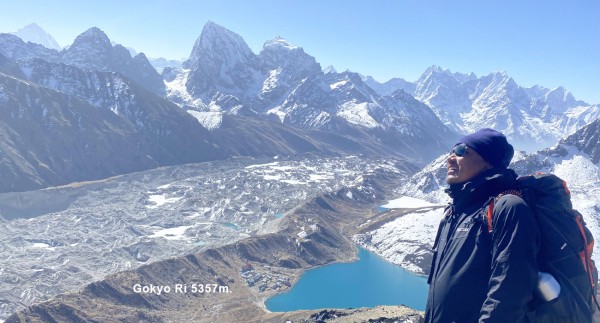
- The Khumbu Glacier and Icefall, seen from above for the first time after days of walking beside it at ground level.
- Pheriche and Dingboche's patchwork stone-walled fields, a completely different perspective than the trail-level view of the same villages.
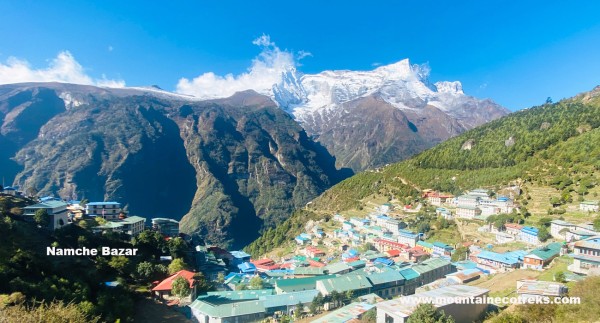
- Namche Bazaar's amphitheater of houses, visible as a whole in a way it never is from the trail winding through it.
- The forested hills and river valleys below Lukla, opening out into wider, greener terrain as you descend in altitude.
- The Kathmandu Valley itself, hazier, warmer, and suddenly full of roads and rooftops after days of stone and snow.
Photographers should keep a camera or phone accessible rather than packed away, since the best views arrive with little warning and the flight doesn't pause for them.
The Motion Sickness Nobody Mentions
Here's the detail that almost never makes it into a trip description: the flight can be genuinely turbulent, particularly over ridgelines and ravines where thermal air currents are strongest, usually in the mid-morning hours. Combined with the tight banking turns pilots sometimes use to give window views, a portion of trekkers do experience motion sickness, especially those who are also still adjusting from several days at altitude. If you're prone to motion sickness on boats or small planes, it's worth mentioning to your guide beforehand and considering an anti-nausea tablet before boarding. It's a short flight, but a rough ten minutes at 4,000 meters in a small cabin is worth planning around rather than being surprised by.
Landing: The Anticlimax That's Actually a Relief
After the emotional intensity of liftoff and the descent, landing in Kathmandu is almost jarringly ordinary. You step off onto tarmac, a private vehicle is usually waiting, and within the hour you can be showering in a five-star hotel room, still faintly smelling of woodsmoke from the lodges. The contrast, from the Khumbu Icefall to a hotel bathrobe in under two hours, is genuinely one of the strangest and best parts of the whole trek, and it's rarely described honestly because "convenient" doesn't capture how surreal that transition actually feels.
Frequently Asked Questions
How long is the helicopter flight from Gorak Shep to Kathmandu? The flight itself typically takes 35 to 45 minutes, though most itineraries build in extra time at Gorak Shep or a stop at Lukla for refueling and passenger transfers, so the full return process from lodge to Kathmandu hotel usually takes half a day.
What is the luggage weight limit for the helicopter return? Most operators enforce a strict weight limit of around 15kg per person, including your duffel bag. Extra weight from trail purchases can be an issue, so it's worth weighing your bag before departure day if you've bought souvenirs along the route.
Do helicopter flights from Gorak Shep get delayed often? Yes, delays are common, particularly during peak trekking season, due to fast-changing mountain weather. Most luxury itineraries include a buffer day specifically to absorb weather delays, but travelers should avoid booking international flights on the same day as their planned return to Kathmandu.
Is the helicopter ride from Everest Base Camp scary or turbulent? It can be turbulent, especially over ridgelines and in mid-morning air, and some trekkers experience motion sickness during the flight. It is not considered dangerous on a well-operated luxury trek, but travelers prone to motion sickness should consider medication beforehand and mention it to their guide.
Which side of the helicopter has the best views on the return flight? The right side of the aircraft typically offers the clearest views of the Khumbu Glacier, Icefall, and surrounding peaks on the descent, though pilots often adjust the flight path to give all passengers a view.
Is the helicopter return worth it compared to walking back? For most trekkers, yes. It replaces three to four physically demanding descent days with a 35-to-45-minute flight, reduces knee and joint strain from the long downhill walk, and offers aerial views of the route that are impossible to see from the trail itself.
The Honest Takeaway
The helicopter return from Everest Base Camp is genuinely one of the best-value inclusions on the Everest Base Camp Luxury Trek, but it's not the seamless, purely scenic afterthought most trip descriptions make it sound like. It's loud, occasionally delayed, sometimes stomach-churning, and emotionally strange in a way that's hard to predict until you're actually in the seat watching the trail you walked for a week disappear beneath you in minutes. Go in expecting all of that, and it becomes one of the most memorable parts of the entire trip rather than just a convenient way home.
Ready to plan your own return over the Khumbu? View the full Everest Base Camp Luxury Trek itinerary, or explore the standalone Everest Base Camp Trek with Helicopter Return for a shorter option.
Recent From Blog

19th Apr, 2019


23rd Dec, 2018

11th Jan, 2024

14th Jan, 2024

29th Jan, 2025

11th Feb, 2025

18th Feb, 2025

25th Feb, 2025

5th Apr, 2025
23rd Dec, 2025
9th May, 2026
12th Jul, 2026

13th Aug, 2026
13th Aug, 2026
13th Aug, 2026

16th Aug, 2026
20th Aug, 2026


11th Sep, 2026
24th Sep, 2026
25th Sep, 2026
5th Oct, 2026
6th Oct, 2026